

Table of Contents
- What Does a Deposit Back Guarantee Actually Cover and Exclude
- End of Tenancy Cleaning Checklist for Tenants: Room-by-Room Standards
- What Does End of Tenancy Cleaning Include: Professional Service Scope
- How Long Does End of Tenancy Cleaning Take: Realistic Timelines
- End of Tenancy Cleaning Guarantee: Understanding Your Protection
- Tenant Rights and Deposit Disputes: What Happens When Cleaning Issues Arise
- Evidence Collection: Before-and-After Documentation That Protects Your Deposit
- Fair Wear and Tear Versus Cleaning Issues: Know the Difference
- Frequently Asked Questions
Last Updated: October 14, 2026
What Does a Deposit Back Guarantee Actually Cover and Exclude
A deposit back guarantee cleaning service promises to return your rental deposit in full by meeting specific cleaning standards set by your landlord or letting agent.
Most guarantees cover general deep cleaning: kitchens, bathrooms, carpets, and accessible surfaces, including oven cleaning, fridge sanitising, and window cleaning. They often do NOT cover damage, stains that won’t lift, or areas the cleaner cannot safely access, and usually exclude pre-existing damage, pest infestations, or repairs beyond cleaning.
The real protection comes from knowing what your letting agent or landlord actually expects. That’s why before-and-after photos, a detailed checklist signed off by the cleaner, and written confirmation of what the service included all protect you if a dispute arises.
At Excellent Services, we provide a deposit back guarantee. The guarantee covers cleaning standards only, not damage to the property itself.
Request the specific cleaning checklist your landlord or letting agent expects BEFORE booking a service. Share it with your cleaner. A mismatch between what was cleaned and what was inspected is the leading cause of deposit disputes.
End of Tenancy Cleaning Checklist for Tenants: Room-by-Room Standards
End of tenancy cleaning requires a systematic approach. Each room has specific standards that letting agents and landlords check during the final inspection. Missing even one category can result in deposit deductions.
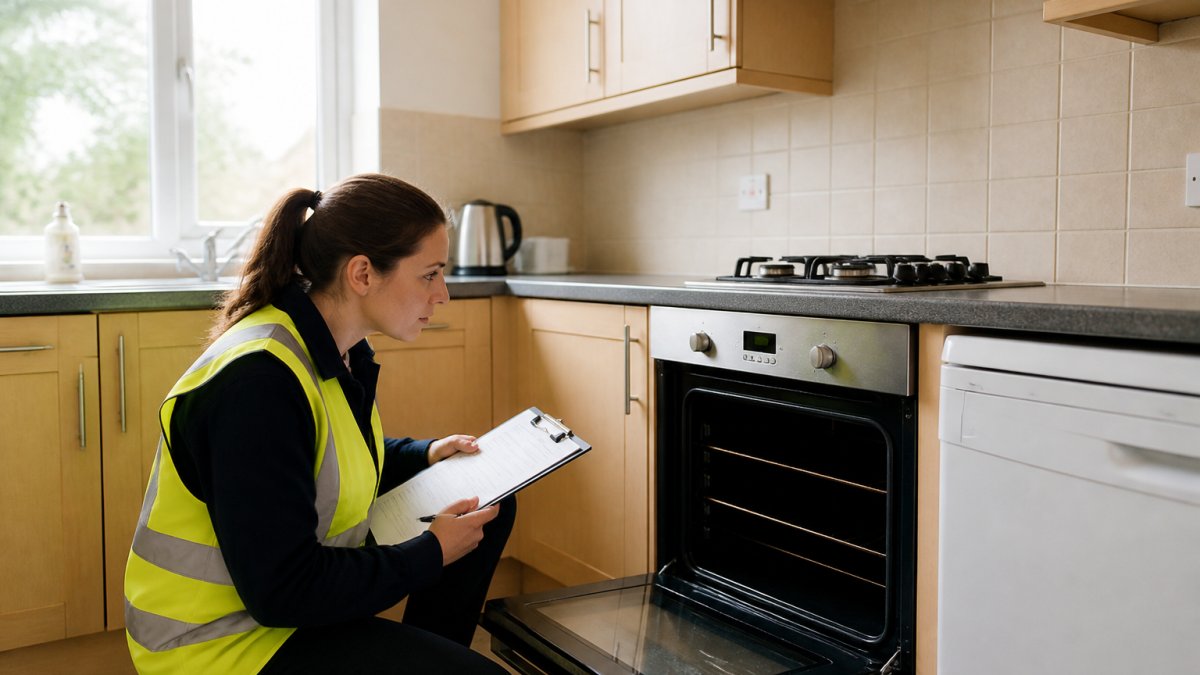
The checklist below covers the main areas inspectors focus on. Work through each section methodically, or hire a professional service that guarantees this standard.
Kitchen Cleaning Requirements
The kitchen receives the most scrutiny during inspection. Grease buildup, limescale, and food residue are the most common reasons for deposit deductions.
Deep clean the oven inside and out, including racks and glass. Wipe cabinet fronts and handles, clean behind and underneath the fridge and cooker, descale the kettle and taps, wipe skirting boards, and clean inside the microwave. Ensure all surfaces are grease-free and shining.
The stovetop and hob need particular attention. Burnt-on food and grease stains here are flagged immediately. Use appropriate degreasers and allow time for them to work. Rinse thoroughly and dry to avoid water marks.
Floors should be swept, vacuumed, and mopped. Sticky spots and crumbs suggest a rushed job, and inspectors often walk the kitchen perimeter and check corners where dirt accumulates.
Bathroom Sanitising and Deep Cleaning
Bathrooms must be sanitised and free of limescale, mould, and soap scum. These issues suggest neglect and are common deposit deduction triggers.
Scrub the toilet bowl, seat, and exterior. Disinfect the sink and taps. Remove limescale from shower heads and taps using appropriate descalers. Clean the shower or bath thoroughly, including grout. Wipe mirrors until streak-free. Clean behind and underneath the toilet and sink. Ensure no mould or discolouration on walls or ceilings, especially around moisture-prone areas.
Floors must be swept and mopped. Dried soap residue or hair suggests incomplete cleaning, so check corners and under the sink for dust or debris.
Accessible Surfaces and Hard-to-Reach Areas
Inspectors check surfaces most people forget: light switches, door frames, skirting boards, and the tops of door frames.
Wipe all light switches and door handles. Dust picture rails and high shelves. Clean window sills inside and out. Wipe skirting boards throughout the property. Remove cobwebs from corners and ceilings. Dust radiators and vents. Clean inside wardrobes and cupboards if they’re part of the inventory check.
These details signal whether the entire property received attention or just the obvious surfaces.
Hard-to-reach areas like the tops of wardrobes and inside extractor fans are frequently missed by DIY cleaners. Inspectors specifically look for these. If you’re cleaning yourself, use a step ladder and allocate extra time for these zones.
What Does End of Tenancy Cleaning Include: Professional Service Scope
Professional end of tenancy cleaning services typically include a comprehensive deep clean across all areas of the property. The scope varies by provider, so clarify what’s included before booking.
Most services include deep cleaning of all rooms, kitchen appliance cleaning (oven, fridge, freezer, microwave), bathroom sanitising, carpet or floor cleaning, window cleaning, and removal of light fixtures for cleaning behind them.
What’s often NOT included: repairs or touch-ups to damage, disposal of tenant belongings, pest treatment, or garden maintenance beyond basic tidying. Carpet stain removal may be limited: a professional cleaner can treat stains, but some are permanent and won’t respond to cleaning alone.
Excellent Services provides a full scope breakdown with each booking, so you know exactly what will be cleaned and to what standard.
Request a written scope of work before booking. A vague promise to “deep clean” leaves room for disagreement. Specific tasks, “oven cleaned inside and out,” “all skirting boards wiped”, protect both you and the cleaner.
How Long Does End of Tenancy Cleaning Take: Realistic Timelines
The time required depends on property size, current condition, and depth of cleaning. Rushing the job is a leading cause of incomplete cleaning and deposit disputes.
A one-bedroom flat typically takes 4-6 hours for a thorough deep clean, a two-bedroom property 6-8 hours, and three-bedroom homes 8-10 hours. These timelines assume reasonable condition with no excessive damage or neglect.
If the property has been poorly maintained or contains heavy grease buildup, add 2-3 hours. If carpets need shampooing in addition to general cleaning, add another 1-2 hours depending on carpet size.
Professional cleaners allocate specific time to high-risk areas. The kitchen and bathroom together often account for 40% of total time because they receive the closest inspection, and rushing them is where most deposit deductions occur.
Booking a service with realistic timelines protects you.
End of Tenancy Cleaning Guarantee: Understanding Your Protection
A deposit back guarantee cleaning service offers protection, but only within defined limits. Understanding what a guarantee actually promises prevents disappointment at inspection time.
Most guarantees promise a re-clean within 24-72 hours if the initial service doesn’t meet the agreed standard.
Some guarantees extend to deposit recovery assistance: if the landlord still withholds money despite a professional clean, the service may help dispute the deduction or provide supporting documentation.
Read the guarantee terms carefully.
Excellent Services offers a deposit back guarantee with a 72-hour re-clean window. If our team’s cleaning doesn’t meet your landlord’s or letting agent’s standard, we return to address the issue at no extra cost.
Keep communication records with your landlord or letting agent. If they note specific cleaning issues during inspection, forward those notes to your cleaning service immediately. The clearer the feedback, the faster a re-clean can address it.
Tenant Rights and Deposit Disputes: What Happens When Cleaning Issues Arise
When a landlord or letting agent withholds deposit money citing cleaning issues, you have rights. Understanding the deposit-dispute process clarifies when a cleaning guarantee actually helps.
In the UK, deposits must be protected in a government-backed scheme within 30 days of receipt (Tenancy deposit protection: Overview).
If you believe the deduction is unfair, you can raise a dispute through the deposit protection scheme.
This is where professional documentation becomes crucial. A cleaning service that provides before-and-after photos, a detailed scope of work, and a written guarantee gives you strong evidence to counter a landlord’s claim that the work was inadequate.
Fair wear and tear is also relevant. A landlord cannot deduct for normal wear, only for cleaning issues beyond reasonable use.
Do not accept a deposit deduction without a detailed breakdown. If your landlord provides only a vague reason, request specifics. A dispute scheme will not uphold a deduction without itemised evidence of what wasn’t cleaned and why cleaning alone cannot fix it.
Evidence Collection: Before-and-After Documentation That Protects Your Deposit
Documentation is your strongest defence in a deposit dispute. Before-and-after photos, written checklists, and professional reports create a clear record of the property’s condition and the cleaning done.
Before the cleaner arrives, take photos and video of the entire property, including corners, skirting boards, and hard-to-reach areas.
After cleaning, take photos of the same areas. Request that your cleaning service also provides before-and-after documentation.
Request a written checklist from the cleaner confirming what was cleaned and to what standard. This becomes evidence if a dispute arises.
Keep all correspondence with your landlord, letting agent, and cleaning service. If the landlord raises concerns during inspection, ask for written feedback.
| Documentation Type | What to Capture | When to Collect |
|---|---|---|
| Pre-clean photos | All rooms, corners, damage, stains | Before cleaner arrives |
| Post-clean photos | Same angles as pre-clean, focus on oven, bathroom, kitchen | Immediately after cleaning |
| Cleaning checklist | Itemised list of tasks completed | From cleaner on completion day |
| Landlord feedback | Written notes on any cleaning issues flagged | During or after inspection |
| Service guarantee | Written guarantee terms and re-clean window | From cleaner at booking |
Fair Wear and Tear Versus Cleaning Issues: Know the Difference
The distinction between fair wear and tear and actual cleaning failures is central to deposit disputes.
Fair wear and tear includes carpet worn thin in high-traffic areas, small scuffs on walls from furniture, faded paint from sunlight, minor marks on skirting boards, and worn patches on flooring.
Cleaning issues include: grease buildup in the kitchen, limescale on taps, soap scum in the bathroom, dirt in corners or under furniture, dust on surfaces, and grime on windows.
The grey area involves stains.
If your landlord claims a stain is a cleaning issue, ask for evidence it wasn’t there when you moved in.
If it’s a cleaning issue, our guarantee covers a re-clean; damage or permanent wear falls outside cleaning scope.
Frequently Asked Questions
What does a deposit back guarantee for end of tenancy cleaning cover?
A deposit back guarantee typically covers professional cleaning to meet letting-agent and landlord standards for the property’s handover. It includes deep cleaning of all rooms, kitchens (ovens, appliances), bathrooms, and hard-to-reach areas. However, guarantees vary: some cover a re-clean within 24-72 hours if the landlord or agent requests it, while others may exclude damage, missing items, or pre-existing issues. Always check the specific terms before booking, guarantees do not protect against structural damage, pet damage, or tenant negligence, only cleaning quality.
Does professional end of tenancy cleaning guarantee a full deposit return?
No. Professional cleaning can help you meet the property standard required to recover your deposit, but it does not guarantee the landlord will return the full amount. Your deposit depends on the overall condition of the property, cleaning addresses only dirt and stains, not damage like holes in walls, broken fixtures, or missing items. Under the Deposit Protection Scheme regulations, landlords can only deduct for damage beyond fair wear and tear, cleaning costs only if you failed to leave the property reasonably clean. A deposit back guarantee means the cleaner will re-clean at no cost if the standard is not met; it does not override landlord deductions for damage or negligence.
How long does end of tenancy cleaning take for a typical rental property?
Duration depends on property size and condition. Heavily soiled properties or those requiring intensive oven and appliance cleaning may take longer. Professional cleaning teams work systematically room-by-room, including deep cleaning of kitchens, bathrooms, carpets, and accessible surfaces. Booking a professional service ensures the work is completed to letting-agent standards within a predictable timeframe, whereas DIY cleaning often takes significantly longer and may miss areas inspectors check.
What should I do if my landlord or letting agent is unhappy with the cleaning after inspection?
First, request the specific areas or issues the landlord or agent has flagged. Most end of tenancy cleaning guarantees include a re-clean provision within 24-72 hours at no cost if the standard is not met. Contact your cleaning service immediately with the feedback and photos if possible. If the cleaner’s guarantee applies, they will return and re-clean. If disputes arise over whether issues are cleaning-related or pre-existing damage, document everything with photos and communicate in writing. Under Deposit Protection Scheme rules, the landlord must provide evidence of deductions. If deductions seem unfair, you can raise a dispute with the scheme administrator. Ensure your tenancy agreement and final inventory clearly separate cleaning issues from damage.
Getting your rental deposit back depends on meeting your landlord’s cleaning expectations and documenting the work thoroughly. A professional deposit back guarantee cleaning service removes the guesswork and provides the protection you need. Excellent Services offers transparent pricing, a detailed scope of work, and a 72-hour re-clean guarantee so you can move with confidence. Book now and ensure your property meets inspection standards.
Leave a Reply