

Table of Contents
- Commercial vs Residential Cleaning: Scope and Scale
- Property Types and Cleaning Tasks
- Office Cleaning Schedule and Operating Hours
- Equipment, Products, and Specialised Tools
- Staffing, Training, and Quality Control
- Health, Safety, and Regulatory Compliance
- Commercial Cleaning Contract Terms and Professional Service Quote
- Commercial Cleaning Checklist and Quality Standards
- Frequently Asked Questions
Last Updated: October 19, 2026
Commercial vs Residential Cleaning: Scope and Scale
The distinction between commercial vs residential cleaning is fundamental: they serve different purposes, operate under different constraints, and require different approaches to staffing, equipment, and scheduling.
Commercial cleaning targets office buildings, retail spaces, warehouses, and other business premises. The scope is typically much larger, sometimes covering thousands of square metres across multiple floors and departments.
Scale drives everything else. A commercial operation might service a 5,000 square metre office complex with 200 employees, requiring after-hours teams.
The financial model differs too. Commercial contracts are usually longer-term agreements with fixed monthly fees, while residential cleaning is booked weekly or fortnightly.
Property Types and Cleaning Tasks
Different property types require entirely different cleaning strategies. Commercial spaces include open-plan offices, reception areas, kitchens, bathrooms serving dozens of people, and specialised areas like server rooms or laboratories.
Tasks overlap in name but differ in execution. Dusting a bedroom takes one approach; dusting an open-plan office with 50 desks takes another. Offices accumulate paper, toner, and food waste, while homes accumulate personal clutter and pet hair.
High-traffic areas define commercial cleaning more than residential work. Entrance lobbies, corridors, and stairwells in office buildings see constant foot traffic and require daily attention. In homes, high-traffic areas are limited to hallways and kitchen spaces.
Shared spaces create unique challenges.
Office Cleaning Schedule and Operating Hours
Timing separates commercial and residential cleaning more than almost anything else. Commercial cleaning typically happens outside business hours, early morning before 7am, evening after 6pm, or weekends.
Residential cleaning works around occupants’ preferences: some want cleaners during the day, others prefer weekends. This flexibility is a key selling point, and scheduling varies as family routines change.
After-hours commercial cleaning adds complexity: teams arrive when buildings are locked, navigate security systems, and work without disrupting sensitive equipment.
Frequency also differs. Commercial offices typically need cleaning 5 days per week, sometimes daily for high-traffic areas, plus occasional weekend deep cleans. Homes are usually cleaned weekly or fortnightly.
Equipment, Products, and Specialised Tools
Commercial cleaning demands specialised equipment that would be overkill for most homes.
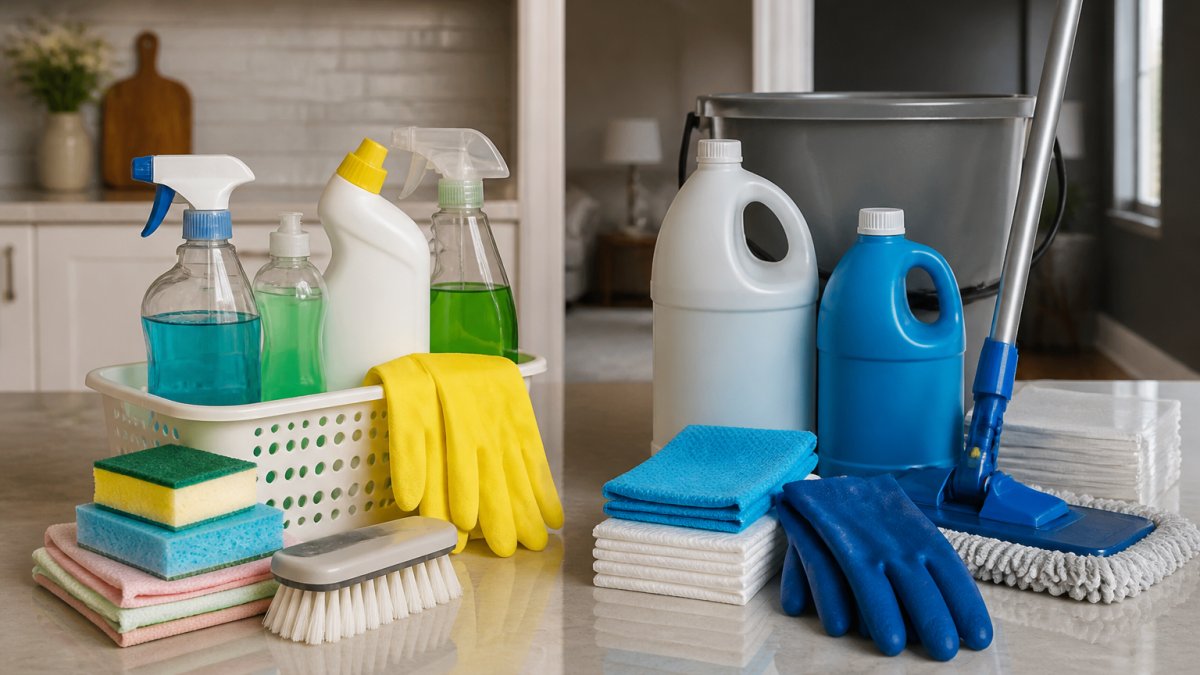
Residential cleaning uses standard domestic equipment: upright vacuums, mops, microfibre cloths, and handheld tools. Consumer-grade equipment suffices, though professional residential cleaners often invest in better-quality versions for durability.
Cleaning products differ significantly. Commercial operations often use concentrated chemicals, industrial degreasers, and hospital-grade disinfectants, which are more potent and cost-effective at scale.
Specialised tools matter in commercial settings: floor scrubbers, pressure washers, and extraction equipment are essential for large spaces. Residential cleaning rarely requires this level of specialisation.
Staffing, Training, and Quality Control
Commercial cleaning operations require larger, more structured teams. A single commercial contract might employ 5-10 cleaners working in shifts.
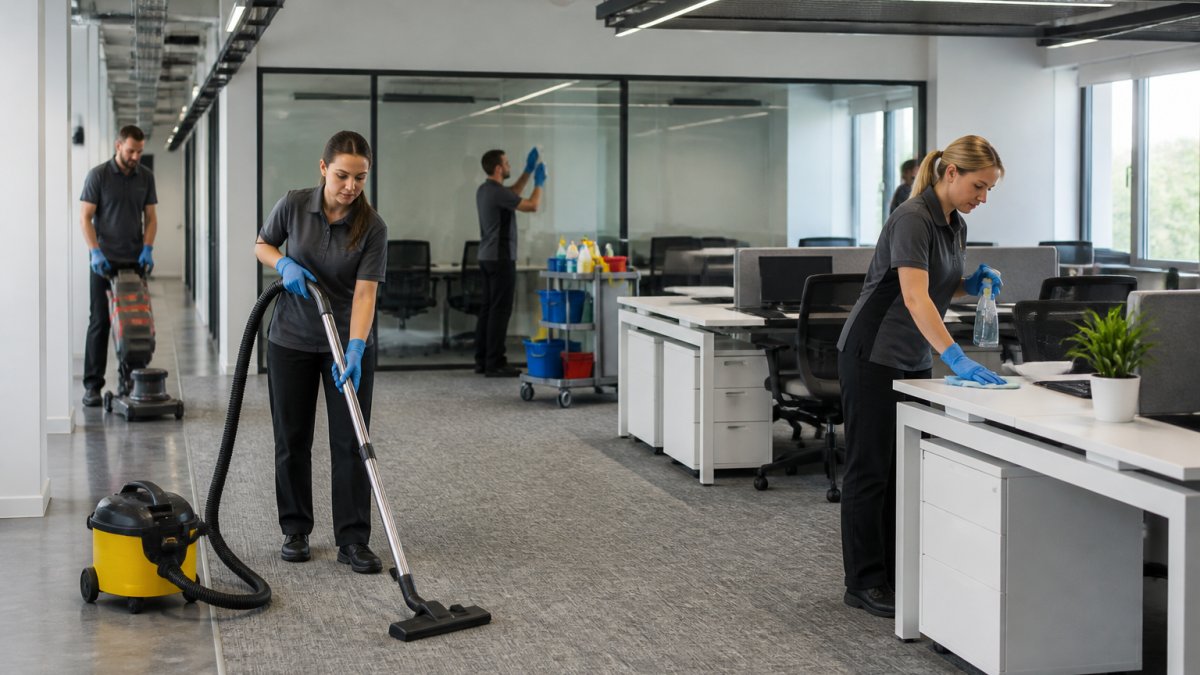
Training standards are higher in commercial settings. Staff must understand health and safety protocols, use industrial equipment safely, and follow detailed specifications; many contracts require certifications.
Quality control differs. Commercial contracts include detailed checklists, inspection protocols, and performance metrics, with clients expecting consistency across sessions.
Supervision is more intensive in commercial cleaning, with supervisors often inspecting work during or immediately after shifts.
Staffing continuity matters differently. Commercial contracts benefit from consistent team assignments, with the same crew learning a space’s specific needs.
Health, Safety, and Regulatory Compliance
Commercial cleaning operates under stricter regulatory frameworks. Offices must comply with the Health and Safety at Work etc.
Residential cleaning has fewer regulatory requirements, since homeowners aren’t bound by workplace safety laws.
Sanitation standards differ significantly. Commercial spaces, particularly offices and kitchens, must meet specific hygiene benchmarks to prevent illness transmission, and bathrooms serving many people require hospital-grade disinfection.
Chemical safety is more regulated commercially. Industrial cleaners must be handled per manufacturer instructions and regulatory guidance, with staff understanding hazards, using protective equipment, and following disposal protocols.
Documentation matters more in commercial cleaning. Contracts often require proof of completion, training records, and incident reports. Residential cleaning rarely involves formal documentation.
Commercial Cleaning Contract Terms and Professional Service Quote
Commercial cleaning contracts are formal agreements specifying scope, frequency, pricing, and performance standards. They typically run for 12 months or longer with fixed monthly fees, though some buyers prefer rolling monthly terms with a notice period. The contract should state which areas are cleaned, how often, to what standard, and what happens when something falls short.
What actually drives the quote
Most commercial quotes are built from a small number of inputs. Understanding them lets you sanity-check a proposal rather than accepting the first number:
- Cleanable floor area, measured in square metres, but only the areas actually cleaned. A 2,000 m² warehouse with a 200 m² office is priced closer to the office, not the whole building.
- Visit frequency, daily, three times a week, or weekly. Frequency multiplies labour, so it is usually the single biggest lever on price.
- Task scope, vacuuming and bin emptying cost far less per visit than periodic deep cleans, carpet extraction, floor buffing, or high-level dusting.
- Staffing and hours, after-hours work (before 7am or after 6pm), weekend visits, and bank holiday cover typically carry a premium because of unsocial-hours pay and travel.
- Consumables and equipment, who supplies bin liners, hand soap, paper towels, and specialist chemicals. Supplies-included quotes are higher but remove hidden recharges.
- Access and security, fob systems, alarm codes, keyholding, and lone-working arrangements add administrative cost and should be priced explicitly.
A common pattern is a per-square-metre rate for routine cleaning plus separate line items for periodic tasks. Ask for the quote broken down this way: a single blended monthly figure hides which tasks are actually being paid for and makes it hard to compare suppliers.
Scope and contract checklist
Use this checklist when comparing proposals. A quote that cannot answer these points is not comparable to one that can:
- Inclusions, room-by-room task list, frequency per task, and any periodic deep cleans.
- Exclusions, what is explicitly not covered (e.g. internal window cleaning above ground floor, oven interiors, biohazard or sharps removal).
- Supplies, who provides consumables, equipment, and chemicals, and whether replacements are recharged.
- Quality checks, inspection frequency, who signs off, and how results are recorded.
- Response times, how quickly the contractor responds to a complaint or a missed visit.
- Cancellation and variation, notice period, how changes to scope or frequency are priced, and whether there is a minimum term.
- Insurance and vetting, public liability cover, employer’s liability, and background checks for staff with keys or alarm codes.
Residential quotes are simpler but not always cheaper per hour
Residential cleaning is usually quoted per visit based on property size, frequency, and tasks. A weekly clean of a three-bedroom home is priced as a recurring visit; a one-off deep clean is priced separately. Regular clients often get a lower per-visit rate.
The trap for buyers is comparing a residential hourly rate with a commercial per-square-metre rate. They measure different things: a commercial quote bundles supervision, consumables, insurance, and out-of-hours cover, while a residential quote may assume the client supplies products and is present. Compare like with like, and ask both suppliers to state what is included.
Ask every supplier for the same three documents: a room-by-room scope, a task-frequency schedule, and a written list of exclusions. Proposals that provide all three are far easier to compare than a single monthly figure.
Service level agreements (SLAs) are standard in commercial contracts, defining response times, replacement-staff protocols, and remedies for missed standards. Residential arrangements rarely include a formal SLA, so expectations are usually agreed in writing at the outset, worth doing even for a simple weekly clean.
Commercial Cleaning Checklist and Quality Standards
A professional commercial cleaning checklist covers every area of the facility, entrances, corridors, offices, kitchens, bathrooms, break rooms, and specialised spaces, with specific tasks per area: vacuuming, mopping, disinfecting touchpoints, emptying bins, and restocking supplies. It turns a verbal promise into something inspectable and enforceable.
Turning ‘clean’ into something you can measure
Most competitors stop at ‘measurable and objective’ without saying what is measured. A practical quality framework uses a small set of indicators that a client or supervisor can actually track:
- Inspection scores, a supervisor scores a sample of rooms against the checklist (for example, a simple pass/fail per task, or a 1-5 rating per area). Scores are recorded per visit so trends are visible, not just snapshots.
- Task completion rate, the proportion of scheduled tasks signed off as complete. A rate below target flags understaffing or unrealistic scope before the client notices.
- Response time to issues, how long between a client reporting a problem and the contractor attending or resolving it. This is the clearest test of an SLA.
- Complaint resolution, number of complaints, time to close, and whether the same issue recurs. Recurring complaints usually point to a scope or training problem rather than individual error.
- Consumable stock checks, whether soap, towels, and liners are replenished on schedule, a simple proxy for whether the visit actually happened as specified.
These measures work because they are recorded, comparable over time, and tied to the contract. A supplier that cannot show inspection records or completion logs is asking you to take quality on trust.
How inspections actually work
In practice, commercial quality control runs on a short cycle. A supervisor inspects a sample of areas during or after a shift, records results against the checklist, and raises shortfalls for correction before the next visit. Monthly or quarterly audits review trends across the contract rather than a single visit.
Photographic evidence and sign-off sheets are common where the client is not on site during cleaning hours. They give the client a record without requiring attendance at 6am. The weakness to watch for is documentation that is completed but never reviewed; ask how inspection results are shared and what triggers corrective action.
A checklist with no inspection mechanism is a wish list. Before signing, ask to see a sample completed inspection record and confirm who reviews it and how often.
Residential quality is judged differently
Residential checklists are less formal but still cover bedrooms, bathrooms, kitchens, living areas, and hallways, vacuuming, dusting, bathroom and kitchen cleaning, and mopping. The difference is that residential quality is judged against the client’s own expectations rather than a contractual standard.
Professional residential cleaners manage this by agreeing priorities at the first visit (kitchen and bathrooms first, or pet hair in specific rooms), asking clarifying questions, and seeking feedback after each clean. Repeat bookings are the de facto quality signal: satisfied clients rebook, dissatisfied ones do not. That is a weaker feedback loop than commercial inspections, which is why written expectations matter even for a simple weekly clean.
A usable standard for both sectors
Whether the property is a home or a workplace, the same three questions separate a professional service from an ad-hoc one: is there a written task list, is completion recorded, and is there a defined response when something is missed? Commercial contracts usually formalise all three; residential arrangements often rely on goodwill. Buyers in either sector are better served by asking for them explicitly.
Frequently Asked Questions
What is the main difference between commercial and residential cleaning?
Commercial cleaning covers business premises, offices, retail spaces, and industrial facilities with emphasis on high-traffic areas, sanitation standards, and compliance with health codes. Residential cleaning focuses on private homes and apartments with routine maintenance and deep cleaning tailored to household needs. Commercial services typically involve larger square footage, specialised equipment, scheduled after-hours or weekend service, and formal contracts. Residential services offer more flexible scheduling and customised solutions for individual households.
How often should a commercial property be professionally cleaned?
Commercial cleaning frequency depends on foot traffic, facility type, and regulatory requirements. High-traffic office spaces typically need daily or five-times-weekly cleaning. Retail environments may require daily service, while less-used facilities might need twice-weekly or weekly cleaning. Sanitation standards and health codes often mandate minimum cleaning schedules. A professional cleaning service quote should specify the frequency that meets your business premises requirements and maintains compliance with relevant standards.
Do commercial cleaners use different equipment from domestic cleaners?
Yes. Commercial cleaners use specialised equipment designed for larger spaces and heavier use: industrial-grade vacuums, floor buffers, pressure washers, and commercial-strength disinfection systems. Residential cleaners use standard household equipment suitable for apartments and homes. Commercial cleaning products are formulated for high-traffic areas and often meet stricter sanitation requirements. The choice of equipment reflects the scope of work, surface care needs, and health and hygiene standards applicable to each facility type.
Is commercial cleaning more expensive than residential cleaning?
Commercial cleaning typically costs more per visit due to larger square footage, specialised equipment, trained staff, and compliance requirements. However, total cost depends on facility size, cleaning frequency, scope of tasks, and service contract terms. Residential cleaning may cost less per visit but varies by property size and depth of cleaning needed. Labour requirements, equipment investment, and insurance also influence pricing. Request a professional cleaning service quote tailored to your specific property to understand actual costs.
Leave a Reply